
Does your living room feel more cramped than cozy? You’re not alone. The challenge of decorating a small living room is a common one, especially in urban homes where every square foot counts. Trying to balance essential furniture, storage, and personal style without creating a cluttered, claustrophobic space can feel like an impossible puzzle. It’s frustrating when you have a grand vision, but a small footprint to work with.
But what if your small space could feel open, airy, and impeccably stylish? It can. As architects, we believe that limitations often breed the most creative solutions. This guide is your comprehensive resource for transforming your compact living area. We’ve compiled over 47 actionable, expert-approved small living room design ideas—from foundational furniture layouts to clever visual tricks—that will help you reclaim your space.
You’ll learn how to select the right furniture, use illusions to expand your room’s perceived size, apply color theory like a pro, and sidestep the common mistakes that make a small room feel even smaller. Let’s unlock your living room’s true potential.
Master Your Layout & Furniture
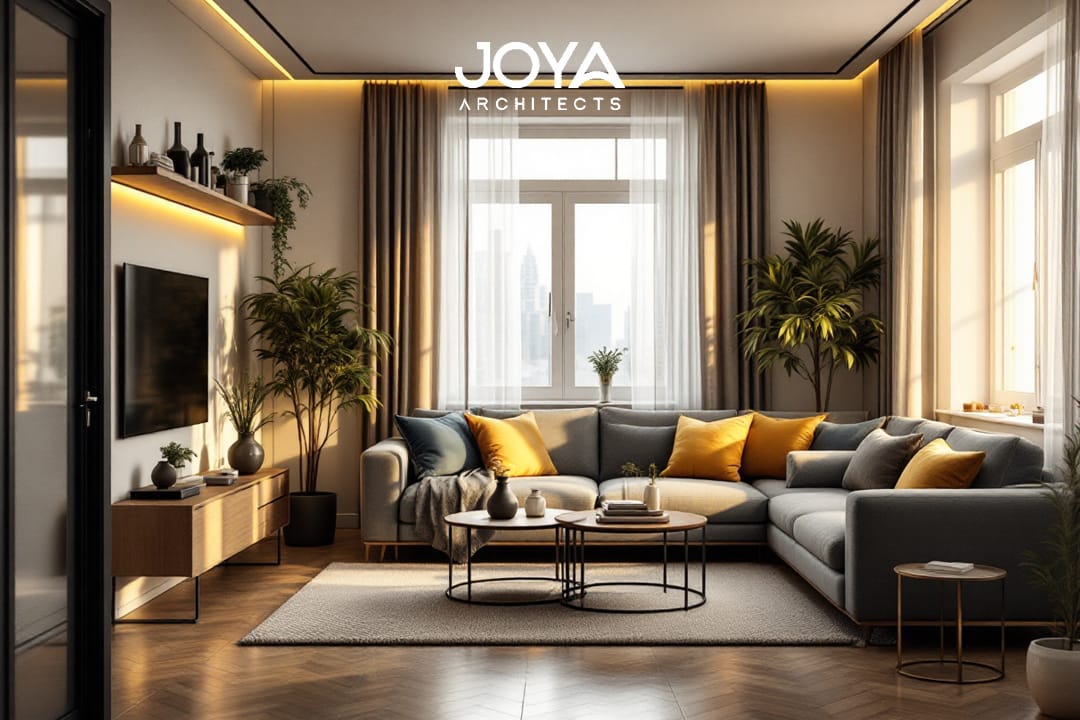
The foundation of any great small living room design is its layout and the furniture within it. These physical choices are the most critical; getting them right can solve 80% of your space-related challenges before you even think about paint colors or decor.
Choose Smart, Scaled-Down Furniture
- Embrace “Apartment-Sized” Pieces: Ditch the oversized, overstuffed sofas that dominate a room. Instead, look for furniture specifically designed for smaller spaces, often labelled “apartment-sized.” This includes loveseats, petite armchairs, and smaller-scale sectionals.
- Opt for Slim Silhouettes: The bulkier the furniture, the smaller the room feels. Choose pieces with clean lines, thin arms, and a tight back. A sofa with shallow seats takes up less floor space while still providing comfortable seating.
- Consider a Backless Sofa or Daybed: A backless sofa or a chic daybed can be placed in the middle of a room without visually dividing the space as harshly as a traditional sofa would. It doubles as a stylish lounger and seating area.
- Use Armless Chairs: Accent chairs without arms have a much smaller footprint and can be tucked away more easily, making them a versatile choice for extra seating.
Embrace Multi-Functional Pieces
- Invest in a Storage Ottoman: This is a small-space champion. It serves as a coffee table (just add a tray), extra seating for guests, a footrest, and a hidden spot to stash blankets, remotes, or magazines.
- Utilize Nesting Coffee Tables: A set of two or three tables that tuck into one another gives you flexibility. You can expand them when you have guests and consolidate them for more floor space day-to-day.
- Choose a Sleeper Sofa: If your living room sometimes doubles as a guest room, a stylish sleeper sofa is a non-negotiable, space-saving solution.
- Add a C-Shaped Side Table: This clever design allows the table’s base to slide under your sofa or armchair, providing a surface for a laptop or drink without taking up extra floor space.
Get “Leggy” with Your Furniture
- Lift Your Sofa Off the Ground: Sofas, armchairs, and media consoles raised on slender legs are a game-changer. This simple feature creates an illusion of more space because the eye can see the floor continuing underneath, making the room feel lighter and more open.
- Select Consoles with Legs: Apply the same principle to TV stands and sideboards. A “floating” or leggy console feels less heavy and imposing than a blocky unit that sits directly on the floor.
Perfect Your Sofa Placement Strategy
- Float Your Furniture: The instinct in a small room is to push everything against the walls. Resist it. “Floating” your sofa and chairs away from the walls—even by a few inches—creates a more intimate and defined seating area, and the negative space around them makes the room feel wider.
- Master the Narrow Room Layout: For a long, narrow room, place a slim sofa against one of the long walls. Opposite it, use two smaller armchairs instead of another sofa. This creates a conversational area without blocking the pathway.
- Use a Sofa to Create Zones: In an open-concept space, the back of a sofa is the perfect tool for defining the living area. Use it to create a soft boundary between the living and dining zones, giving each space its own distinct identity.
Keep the Floor Clear
- Mount Your TV: A wall-mounted television immediately frees up space that would be occupied by a bulky media console.
- Install Floating Shelves: Instead of a traditional bookcase, use vertical wall space with sleek floating shelves. They provide storage and display space without a heavy footprint.
- Switch to Wall Sconces: Free up your floor and side tables by opting for plug-in or hardwired wall sconces for lighting. They provide excellent ambient or task lighting while keeping surfaces clear.
The Art of Illusion: Tricks to Make Your Room Look Bigger
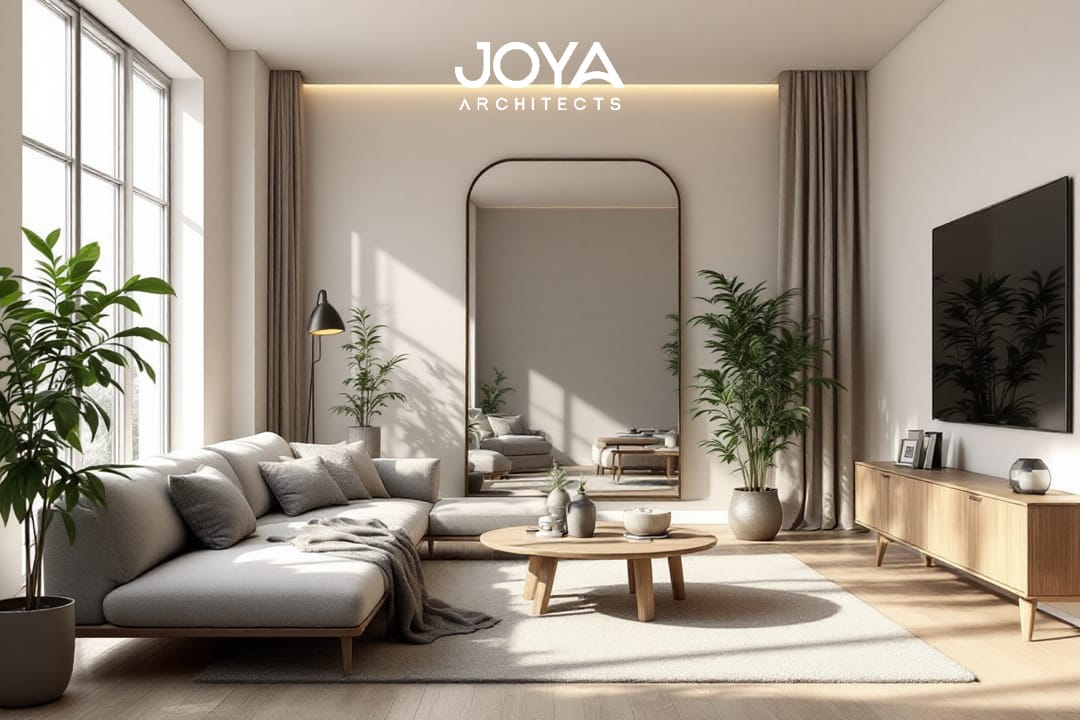
Once your layout is set, you can enhance the sense of space with visual tricks. These are the designer “cheats” that fool the eye into perceiving the room as larger, brighter, and more open than it actually is.
Harness the Power of Mirrors
- Place a Large Mirror Opposite a Window: This is the oldest trick in the book for a reason. As many interior designers will tell you, a mirror reflects both the natural light and the view, doubling the brightness and creating a powerful illusion of depth.
- Use a Mirror as a Focal Point: A large, beautifully framed mirror can serve as artwork over a sofa or console, anchoring the space and making it feel grander.
- Opt for One Large Mirror: A single, oversized mirror is far more effective at creating an illusion of space than a gallery wall of smaller mirrors, which can feel cluttered.
Go Transparent with Glass and Acrylic
- Choose a Glass Coffee Table: A coffee table made of glass or acrylic allows you to see the floor and rug underneath, meaning it takes up zero “visual weight.” You get the function without the bulk.
- Incorporate an Acrylic Console or Chair: See-through furniture, like a “ghost” chair or a waterfall console table, are perfect small living room design ideas. They practically disappear, maintaining an open, airy feel while providing necessary surfaces.
Draw the Eye Upwards
- Hang Curtains High and Wide: This is a transformative tip. Mount your curtain rod 6-12 inches above the window frame and extend it 6-10 inches on either side. Paired with floor-length curtains, this makes ceilings appear taller and windows seem larger.
- Use Vertical Stripes: A rug with vertical stripes or even a subtle striped wallpaper on a single accent wall can draw the eye upward, creating an illusion of height.
- Install Floor-to-Ceiling Bookshelves: Maximizing vertical storage with tall, slender bookshelves forces the eye to travel up, enhancing the room’s height and providing ample storage.
Define the Space with the Right Rug
- Go Big with Your Rug: It’s a common myth that a small rug is best for a small room. The opposite is true. A tiny rug looks like a postage stamp and visually shrinks the space.
- Follow the “Front Legs On” Rule: The golden rule is to choose a rug large enough for at least the front legs of your sofa and all accent chairs to rest comfortably on it. This unifies the furniture into a cohesive group and makes the entire area feel larger and more deliberate.
Strategic Color, Lighting & Decor
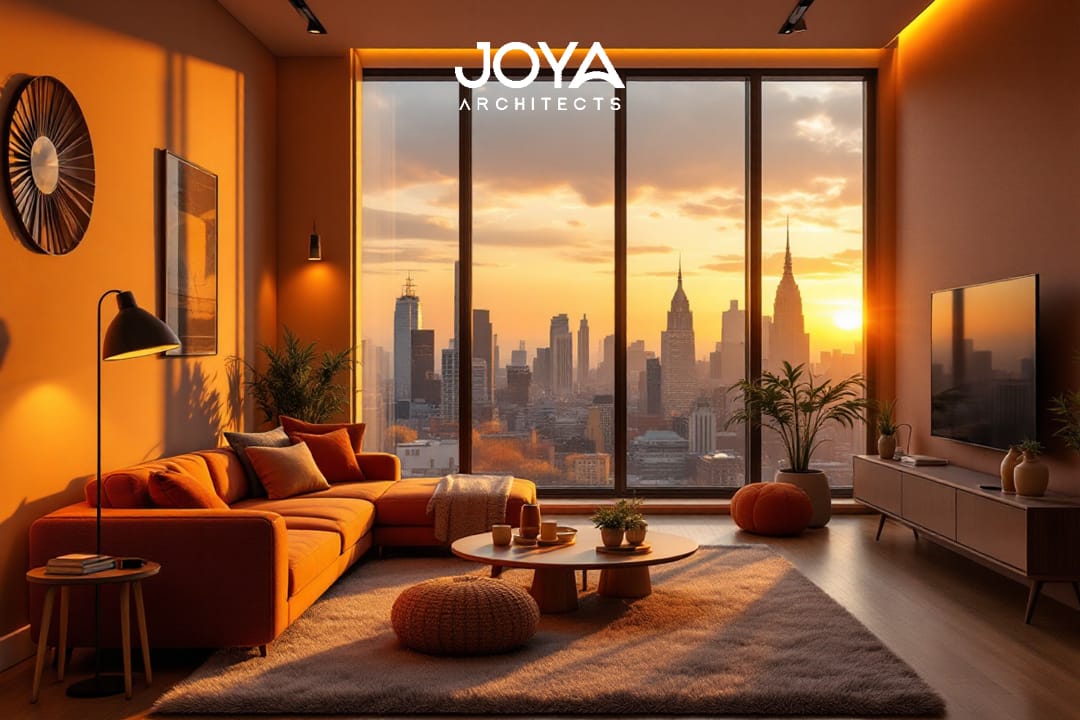
The final layers—color, light, and decoration—tie everything together. These elements influence the room’s mood and can either support or sabotage your efforts to make the space feel larger.
Use a Cohesive, Light Color Palette
- Paint it White (or a Light Neutral): Light and bright is the classic approach for a reason. Light colors like soft whites, creams, pale grays, and pastels are reflective, bouncing light around the room and making walls appear to recede.
- Blur the Boundaries: Paint the walls, trim, and even the ceiling in similar light shades. This blurs the lines where the walls end and the ceiling begins, making the room feel more expansive and seamless.
- Stick to a Monochromatic Scheme: Using varying shades and tints of a single color creates a serene, uncluttered look that helps expand a space visually.
The Exception: Go Bold with “Color Drenching”
- Embrace the “Jewel Box” Effect: Counterintuitively, painting a small room—walls, trim, and ceiling—in a single, rich, dark color like navy blue, emerald green, or charcoal can be incredibly effective.
- Blur the Corners: This technique, known as “color drenching,” blurs the room’s corners and edges, creating a cozy, dramatic, and surprisingly infinite-feeling space. It’s a bold move that delivers a high-style impact.
Layer Your Lighting
- Ditch the Single Overhead Light: Relying on one central ceiling fixture often casts shadows in the corners, making a room feel smaller.
-
Combine Three Lighting Types: A well-lit room feels larger. Layer your lighting with three types:
- Ambient: The main source, like a stylish flush-mount ceiling fixture.
- Task: Focused light for activities, like a reading lamp next to a chair.
- Accent: Light that highlights features, like a sconce over a piece of art.
- Prioritize Slim Floor Lamps: If you need a floor lamp, choose one with a small base and a thin profile, like an arc lamp that can reach over the sofa from a corner.
Curate Your Decor: Less is More
- Go for Large-Scale Art: Instead of a busy gallery wall of small frames, hang one or two large pieces of art. This creates a strong focal point and feels less cluttered.
- Decorate with Plants: Plants add life, color, and texture. Use a tall, slender plant like a Fiddle Leaf Fig or a Snake Plant to draw the eye upward and add a vertical element.
- Use a Minimalist Approach: Avoid covering every surface with small knick-knacks. Be intentional with your decor. A few well-chosen objects will have a much greater impact than a crowd of small items.
Common (and Costly) Small Living Room Mistakes to Avoid
Knowing what not to do is just as important. Here are some of the most common mistakes we see that can sabotage even the best small living room design ideas.
The Overstuffed Sofa
This is the number one offender. A massive, plush sofa with bulky rolled arms and a high back will devour a small room. Always choose furniture that is proportional to the scale of the room itself.
The “Too Small” Rug
A small rug floating in the middle of the floor visually breaks up the room and shrinks your seating area. Remember the rule: anchor your space with a rug that is large enough for the front legs of your furniture to sit on.
Blocking Natural Light
Natural light is your best friend in a small space. Avoid heavy, dark curtains that block light. Don’t place tall bookcases or cabinets in front of windows. Keep window treatments light and airy.
Poor Traffic Flow
A beautiful room is useless if you can’t walk through it comfortably. Always ensure there are clear pathways. A good rule of thumb is to leave about 3 feet of space for main walkways.
Conclusion
A small living room doesn’t have to be a design dilemma. By focusing on the three core pillars—Strategic Layouts, Visual Illusions, and Smart Decor—you can create a space that is not only functional but also a beautiful reflection of your personal style. Remember to choose scaled furniture, maximize light, draw the eye upward, and be intentional with every piece you bring into the room. A small space doesn’t limit your style; it challenges you to be a smarter, more creative decorator.
Ready to transform your space but want an expert eye to guide you? Designing landed homes in Singapore is our specialty at JOYA Architects, and that includes mastering every interior space, no matter the size. We can help you create a living room that is perfectly tailored to your home and lifestyle.
Stop struggling with your small space. Let’s design a solution together. WhatsApp us at +6591920393 for a complimentary, no-obligation consultation today!