
Designing a child’s room is one of the most rewarding projects in a home. It’s a delightful challenge to create a space that’s more than just a place to sleep—it’s a sanctuary for play, a hub for learning, and a canvas for their growing personality. As parents, you’re looking for creative, beautiful ideas, but you also need them to be practical, safe, and budget-friendly.
You’re in the right place. This guide is packed with over 50 kids room interior design ideas to help you navigate every aspect of this exciting journey. We’ll explore imaginative themes, conquer clutter with smart storage, maximize small spaces, and share expert principles for designing a room that effortlessly adapts as your toddler blossoms into a teen.
Core Principles for a Functional and Future-Proof Kids Room
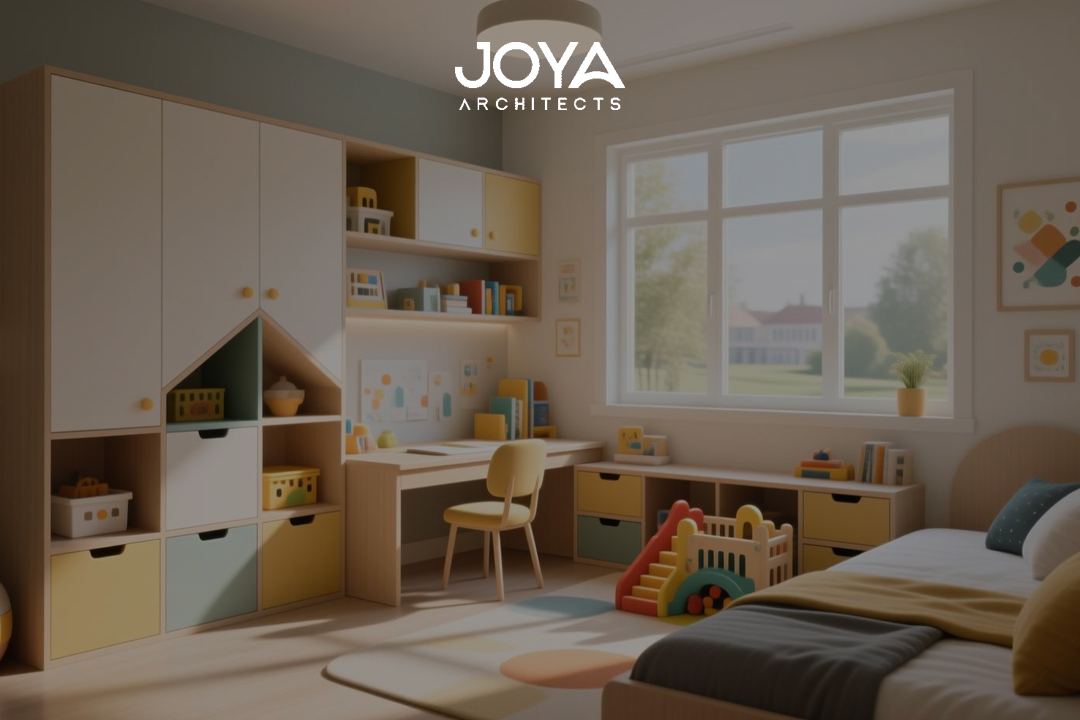
Before diving into themes and colours, laying a functional foundation is key. These core principles ensure the room is safe, organized, and ready to evolve with your child.
Designing for Growth: How to Create a Room That Lasts
Children’s interests change in the blink of an eye. A room obsessed with dinosaurs today might need to be ready for an aspiring astronaut tomorrow. The secret to avoiding constant redecorating is to design an adaptable space.
- Focus on an Adaptable Base: Start with neutral or soft-coloured walls (like gentle greys, warm whites, or calming beige) and classic, well-made furniture. A simple wooden bed frame or a white dresser can serve your child for years, providing a timeless backdrop for any theme.
- Use Easily Swappable Accessories: This is where you can let your child’s current passions shine. Update the room’s feel with themed bedding, vibrant rugs, playful wall art, and fun throw pillows. These items are relatively inexpensive and easy to change, allowing the room to grow without a major overhaul.
- Invest in Quality Transitional Pieces: Choose furniture that can serve multiple purposes over time. A sturdy dresser can last from the nursery years into their teens, and a classic bookshelf can hold picture books now and textbooks later. As a child development expert, Dr. Evelyn Stewart, notes, “A consistent and stable environment helps a child feel secure. By keeping core furniture the same and only updating accessories, you provide that stability while still allowing them to express their evolving identity.”
Safety is Non-Negotiable: Essential Child-Proofing Checklist
A child’s room must be a safe haven. At JOYA Architects, we integrate safety into every design from the very beginning. Here is a checklist to ensure your child’s space is secure:
- Anchor Heavy Furniture: All dressers, bookshelves, and wardrobes must be securely anchored to the wall to prevent tipping.
- Choose Rounded Corners: Opt for furniture with soft, rounded edges to minimize injuries from accidental bumps and falls.
- Manage Cords and Outlets: Use electrical outlet covers on all unused sockets. Keep cords from lamps and electronics tidy and out of reach to prevent tripping or pulling.
- Select Non-Toxic Materials: Use paints labelled “low-VOC” or “zero-VOC” to ensure better air quality. Choose furniture and textiles made from natural, child-safe materials whenever possible.
- Install Cordless Window Treatments: Blinds and shades with cords are a significant strangulation hazard. Always choose cordless options for windows in a child’s room.
The Power of Zones: Creating Areas for Sleep, Play, and Study
Even in a small room, creating distinct “zones” helps a child understand the purpose of each area, promoting both focus and relaxation. This organizational strategy makes a room feel larger and less chaotic.
- Define Zones Visually: Use area rugs to define a play space, position a desk and chair in a corner to create a study nook, or paint an accent wall behind the bed to designate the sleep zone.
- The Sleep Zone: This area should be calm and clutter-free. Keep toys stored away from the bed to signal that this is a space for rest. Soft lighting and comfortable bedding are essential.
- The Play/Craft Zone: Make this area inspiring and accessible. Use low, open shelving for toys, a small table and chairs for crafts, and a durable rug that can handle a bit of mess. A pegboard on the wall is a fantastic way to keep art supplies organized and within reach.
- The Study Zone: For school-aged children, a dedicated homework spot is crucial. Ensure it has good task lighting, a comfortable chair, and simple organization for books and supplies to help them focus.
15+ Imaginative Kids Room Themes to Spark Creativity
A theme brings a child’s room to life, turning it into a world of its own. The key is to choose a theme that can be expressed through flexible decor rather than permanent fixtures.
- Go Wild with a Jungle or Animal Safari Theme: Use earthy tones like olive green, beige, and warm brown. Incorporate animal-print textiles, a variety of plush animal toys, and leafy plant decals on the walls.
- Explore the Cosmos with an Outer Space Theme: Transform the ceiling into a night sky with glow-in-the-dark stars. Hang a planet mobile, and choose bedding with a solar system or rocket ship print. Navy blue walls create a perfect cosmic backdrop.
- Dive Deep with an Under the Sea Adventure: Paint the walls in shades of blue and green to mimic the ocean. Use fish decals, wavy-patterned rugs, and decor shaped like shells or coral to complete the underwater world.
- Inspire Wanderlust with a Travel & Adventure Theme: A world map mural makes a stunning and educational feature wall. Use vintage-style suitcases for creative storage and accessorize with globes and travel-themed art.
- Create Magic with a Fairytale or Storybook Escape: A simple canopy draped over the bed can instantly create a magical fort. Add mushroom-shaped stools, twinkly fairy lights, and decals of woodland creatures or castles.
- Embrace Calm with a Boho Chic Vibe: This style is perfect for creating a serene, peaceful space. Focus on natural textures like rattan furniture, macrame wall hangings, and jute rugs. Use a soft, muted color palette and eclectic patterns for a relaxed, artistic feel.
- Get Active with a Favorite Sports Theme: Celebrate their love for a sport with bedding, wall decals, and a color scheme based on their favorite team. You can even use sports equipment, like a skateboard shelf, as functional decor.
Pro-Tip: Using Peel-and-Stick Wallpaper for a Low-Commitment Mural
Want the impact of a feature wall without the long-term commitment? Peel-and-stick wallpaper is your best friend. It comes in countless patterns and murals, from lush jungles to whimsical landscapes. It’s easy to apply and, more importantly, easy to remove when your child is ready for a new theme, leaving your walls undamaged.
Smart Kids Room Storage Ideas to Conquer Clutter
Effective storage is the single most important element for a functional and peaceful kids’ room. The goal is to make it easy for kids to find their things and, crucially, put them away.
Multi-Functional Furniture: The Ultimate Space Saver
In any kid’s room, especially smaller ones, every piece of furniture should work hard. Multi-functional pieces are a cornerstone of smart design.
- Storage Beds: A bed with built-in drawers underneath is perfect for storing clothes, extra bedding, or seasonal toys, eliminating the need for a bulky, separate dresser.
- Toy Storage Benches: A low bench at the foot of the bed or under a window can provide both seating and a large hidden compartment for toys, books, and games.
- Ottomans with Hidden Storage: A soft, upholstered ottoman is a safe and versatile addition. It can be used as a seat, a play surface, and a secret hiding spot for stuffed animals or blankets.
Go Vertical: Using Walls for Maximum Storage
When floor space is limited, look up! Your walls offer valuable real estate for storage that keeps items organized and off the floor.
- Floating Shelves: Install shelves at various heights. Use lower shelves for books and favorite toys that you want your child to access easily, and higher shelves for display items, decor, or items that require supervision.
- Wall-Mounted Rods: A simple curtain rod mounted on the wall can be used for more than just windows. Use it to hang buckets for art supplies, display dress-up clothes, or clip on your child’s latest artwork.
- Pegboards: A pegboard system is the ultimate in flexible wall storage. You can arrange hooks, shelves, and bins in any configuration to hold everything from craft supplies and small toys to hats and bags.
Baskets, Bins, and Cubbies: The Key to Quick Clean-Ups
Making clean-up time fast and easy is essential. Baskets and bins are perfect for this, as they allow for quick “dumping” and sorting. This approach is far more realistic for a child than neatly stacking items on a shelf.
- Label or Color-Code: Use bins with picture labels for younger children (e.g., a picture of blocks on the block bin) or word labels for older kids. You can also assign a color to each category—blue for LEGOs, red for cars—to make sorting intuitive and fun.
- The Versatility of Baskets: Woven baskets add a wonderful, soft texture to a room and are incredibly versatile. Use large floor baskets for bulky items like stuffed animals or sports balls, and smaller baskets on shelves for books, craft materials, or clothing accessories.
- Cozy Corners with Integrated Storage: Create a dedicated reading or quiet-time nook by pairing a comfortable seat (like a beanbag or a small armchair) with low, accessible cubby storage for books. Having books right next to a comfy spot encourages reading and provides a natural home for them after story time, preventing them from scattering around the room.
Wardrobe Wizardry: Organizing Clothes and Accessories
Teaching a child to manage their own clothes starts with an accessible closet. An organized wardrobe fosters independence and makes getting dressed in the morning much smoother.
- Use Child-Friendly Features: Install a lower rod so your child can hang and choose their own outfits. Use pull-out racks or clear-front drawers inside the wardrobe so they can easily see what’s inside without pulling everything out.
- Divide and Conquer: Use interior shelves and dividers to separate stacks of t-shirts, sweaters, and pants. Small bins on shelves are perfect for organizing socks, underwear, and accessories.
- Encourage Independence: The easier it is for a child to access and put away their clothes, the more likely they are to do it. Keep everyday items at their height and store out-of-season or less-used items on higher shelves.
Designing for Small Kids Rooms: Big Ideas for Little Spaces
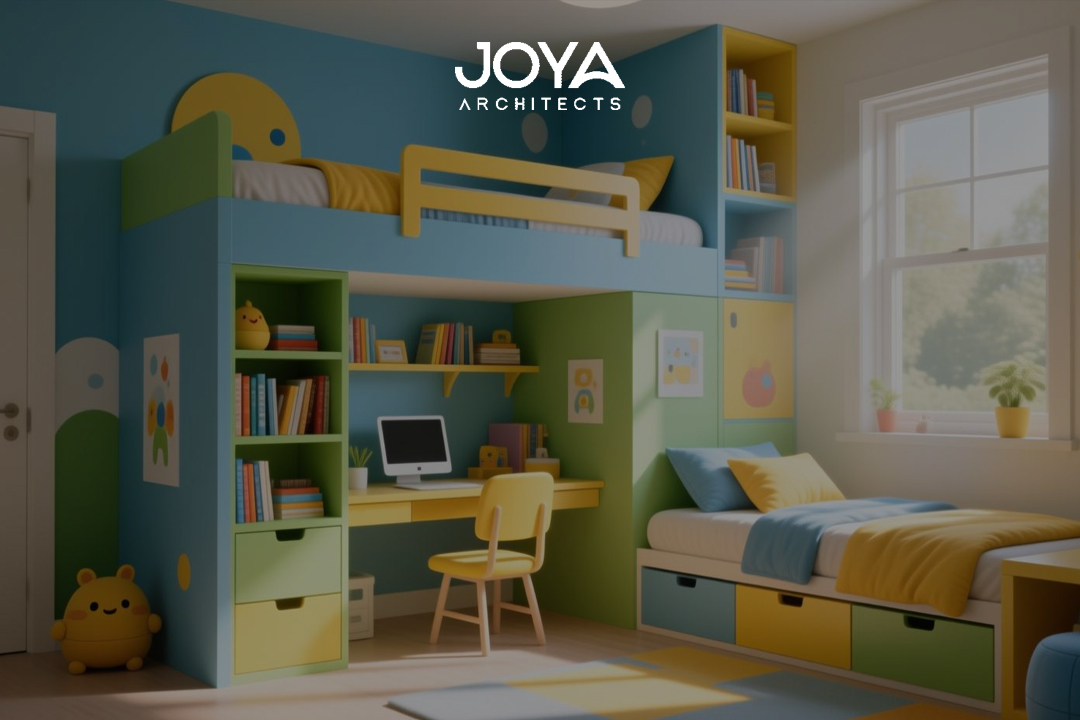
A small room doesn’t have to feel cramped. With smart kids room interior design ideas, you can create a space that feels open, functional, and full of personality.
The Magic of Space-Saving Beds
The bed is the largest piece of furniture in the room, so choosing the right type can dramatically increase your usable floor space.
- Bunk Beds: The classic solution for shared rooms, bunk beds instantly double the sleeping space without taking up more floor area.
- Loft Beds: A loft bed is a game-changer for a single child in a small room. By lifting the bed, you free up the entire footprint underneath for a desk, a cozy reading nook, a small sofa, or a play area.
- Cabin Beds: These brilliant all-in-one solutions feature a bed with an integrated desk, drawers, and shelving, consolidating all major furniture into a single, compact unit.
Use Light Colors and Patterns to Create an Illusion of Space
Visual tricks can make a small room feel significantly larger and more airy.
- Pale Paint Colors: Light colors like white, soft cream, pale blue, or light green reflect more light, making a room feel brighter and more open.
- Mix Your Patterns: While it may seem counterintuitive, using a mix of patterns can make a room feel more dynamic and less confined. The key is to balance scales. For example, pair a large-scale pattern on a feature wallpaper wall with smaller geometric patterns on the bedding or a rug. This interplay tricks the eye and adds depth, preventing the space from feeling flat and small.
- Vertical Stripes: If using wallpaper, a pattern with vertical stripes can draw the eye upward, creating the illusion of higher ceilings.
Choose Scaled-Down Furniture
Bulky furniture can quickly overwhelm a small room. Opt for pieces with a lighter visual weight and smaller footprint.
- Slim-Profile Pieces: Look for narrow bookcases and slim desks that don’t jut out too far into the room.
- Wall-Mounted Options: Instead of a traditional bedside table, use a small wall-mounted shelf or nightstand. This frees up floor space and makes the room feel less cluttered.
- Leggy Furniture: Furniture with visible legs, like a mid-century modern style desk or dresser, allows you to see more of the floor, which creates a greater sense of openness.
Creating a Versatile Gender-Neutral Kids Room
Moving beyond traditional blue and pink opens up a world of sophisticated, timeless, and creative design possibilities. A gender-neutral room focuses on personality and interests, making it perfect for any child and ideal for shared rooms.
Timeless Color Palettes Beyond Blue and Pink
A neutral base provides a calming backdrop that can be easily updated with pops of color.
- Sophisticated Base Colors: Use shades of soft grey, warm white, or earthy beige as your main wall color.
- Vibrant Accent Colors: Introduce personality with bold and cheerful accents. Mustard yellow, sage green, deep teal, burnt orange, or even a playful rainbow spectrum can be brought in through rugs, cushions, artwork, and bedding.
Universal Themes That Everyone Loves
Focus on themes that spark curiosity and imagination for any child.
- Nature and Animals: A forest, mountain, or zoo animal theme is universally appealing. Think woodland creature decals, landscape art, and natural textures.
- Science and Exploration: Inspire a love for learning with themes centered around space, dinosaurs, or cartography (maps).
- Creative Play: A LEGO-themed room, with bright primary colors and clever storage for bricks, is a fantastic option that encourages creativity and is loved by all kids.
- Adventure: Combine earthy tones, maps, and elements like ropes or climbing holds to create a room fit for a little explorer.
Using Patterns and Textures for Personality
When the color palette is neutral, patterns and textures become key for adding visual interest and warmth.
- Geometric and Abstract Designs: Use rugs, wallpapers, and bedding with bold geometric shapes or abstract brushstroke patterns.
- Natural Materials: Layer in plenty of texture with natural materials. A wool rug, a wooden toy chest, a linen canopy, and woven wall decor all add depth and a tactile quality to the room, making it feel cozy and inviting.
- Create a Gallery Wall: A gallery wall is a wonderful way to add personality. Mix and match framed prints of colorful landscapes, abstract art, and your child’s own masterpieces to create a focal point that is unique and easily updated.
Bright Ideas: Lighting Your Kid’s Room for Play and Rest
Good lighting is essential for creating a room that is both a vibrant playroom by day and a calming sanctuary by night. The best approach is to use layers of light.
Layering Light: Ambient, Task, and Accent
- Ambient Light: This is the room’s primary light source. An overhead ceiling fixture with a dimmer switch is ideal, allowing you to adjust the brightness from energetic playtime to a soothing bedtime level.
- Task Light: This is focused light for specific activities. A desk lamp is crucial for homework and crafts, while a bedside lamp or wall-mounted sconce encourages bedtime reading.
- Accent Light: This is the fun, playful layer of light that adds personality. Consider a custom neon sign with their name, strings of fairy lights for a magical glow, or a fun-shaped novelty lamp.
The Importance of a Good Night Light
For many children, a night light provides comfort and security, making it easier for them to fall asleep. Choose one that emits a soft, warm glow, as harsh blue or white light can interfere with sleep cycles. Look for options with timers or dimmers to provide just the right amount of light.
Kids Room Ideas on a Budget: DIY & Thrifty Tips
Creating a beautiful and functional kids’ room doesn’t have to break the bank. A little creativity and DIY spirit can go a long way.
The Power of Paint: A Fresh Coat or a Feature Wall
Paint is the most affordable and impactful tool in your design arsenal. A fresh coat of paint can instantly transform a room. For a bigger statement, create a feature wall with a bold color, a simple mountain mural, or a geometric pattern using painter’s tape. A DIY chalkboard or whiteboard wall offers a huge canvas for creativity.
DIY Wall Art and Decor Projects
- Frame Their Masterpieces: Buy a set of matching, inexpensive frames and create a gallery wall of your child’s own artwork. It’s personal, meaningful, and costs next to nothing.
- Create Simple Hangings: A simple yarn wall hanging, a handmade mobile from felt shapes, or a string of paper garlands are easy DIY projects that add a touch of handmade charm.
Upcycling Furniture with a Coat of Paint
Give an old or thrifted dresser, bookshelf, or side table a new lease on life with a fresh coat of paint. Be sure to properly sand and prime the piece first, and use a child-safe, non-toxic paint. New hardware, like fun knobs or pulls, can also completely change the look of a piece for very little cost.
Your Child’s Perfect Room Awaits
The best kids room interior design ideas are a blend of fun, function, and flexibility. The perfect room is not about having the most expensive furniture or the trendiest theme; it’s about creating a safe, comfortable, and inspiring space that reflects your child’s unique personality while meeting the practical needs of daily life. By focusing on a smart foundation and layering in personality, you can design a room that your child will love for years to come.
Feeling inspired but not sure where to start? Turning these ideas into a cohesive reality can be a big task. At JOYA Architects, we specialize in creating beautiful, functional spaces for families in Singapore’s landed homes. Let us help you design the perfect room that grows with your child.
Ready to create a space your child will treasure? WhatsApp us at +65 9192 0393 for a free, no-obligation consultation today!